Launch offer — valid today only

PE Civil Exam: The Shared Core of All Five Modules, Drawn One Concept per Page, Every Example Solved Step by Step with Units

Effective stress, Rankine, shear and moment, the critical path, EGL and HGL, Manning, vertical curves. In your prep book they're walls of text. Here each one is a page: the drawing, the worked example, the boxes to remember. A visual review of what the five modules share, not a full course for any one module. 66 illustrated pages.

SHOW ME THE DRAWN PAGES

🔒 Secure checkout · PDF by email · 30-day guarantee

One topic per pagethe drawing shows you the concept and the text walks you through it
66 illustrated pages11 parts, from the exam format to work zone safety
Up-to-date sourcesOrganized from the NCEES PE Civil exam specifications (April 2024); each page points you to the design standard listed for your module

This Is What the Pages You Will Study Look Like

One topic per page, the drawing that shows you how it works, and the boxes with what you need to know:

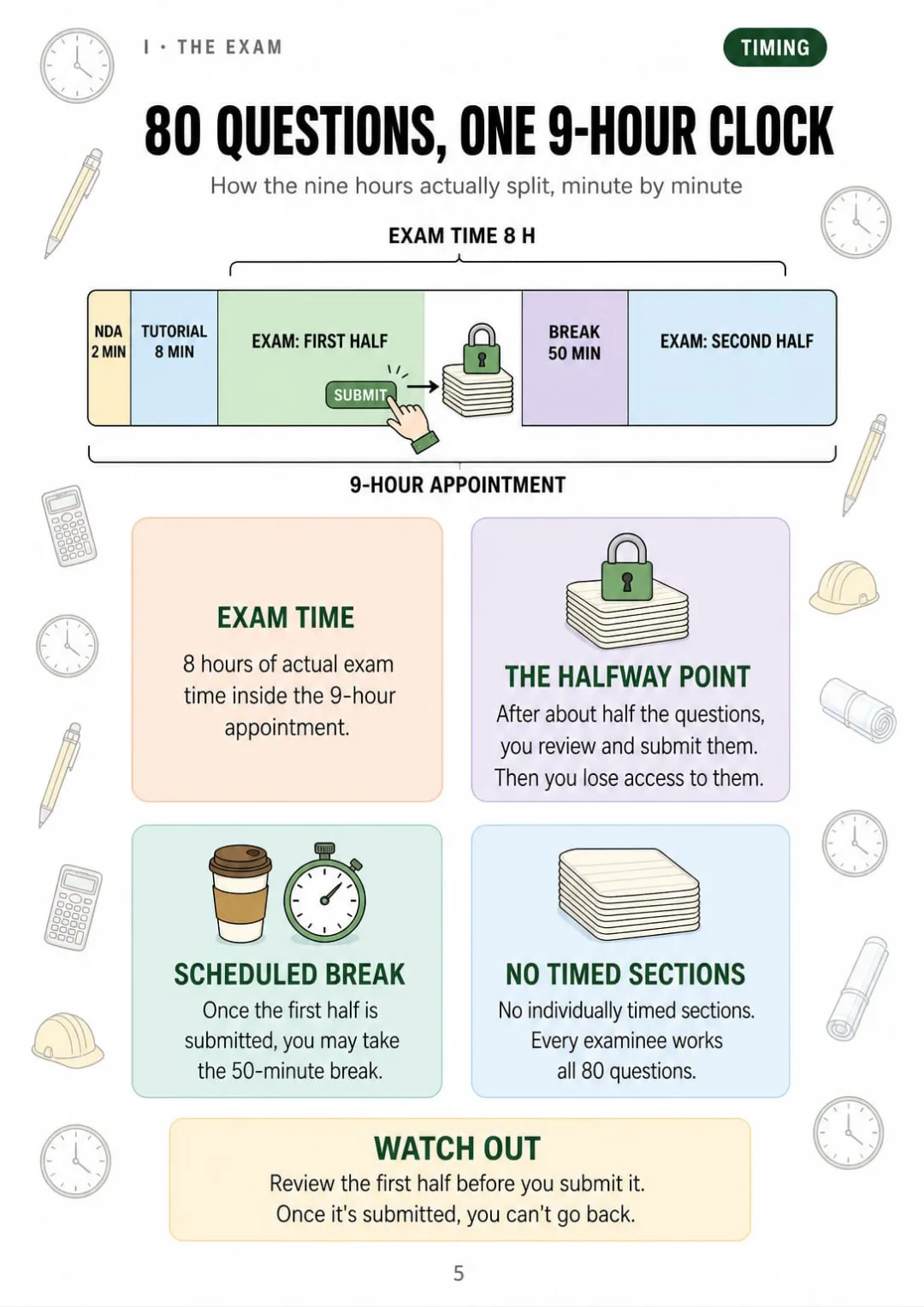
9-hour appointment: 2 min NDA, 8 min tutorial, 8 h exam, 50 min break
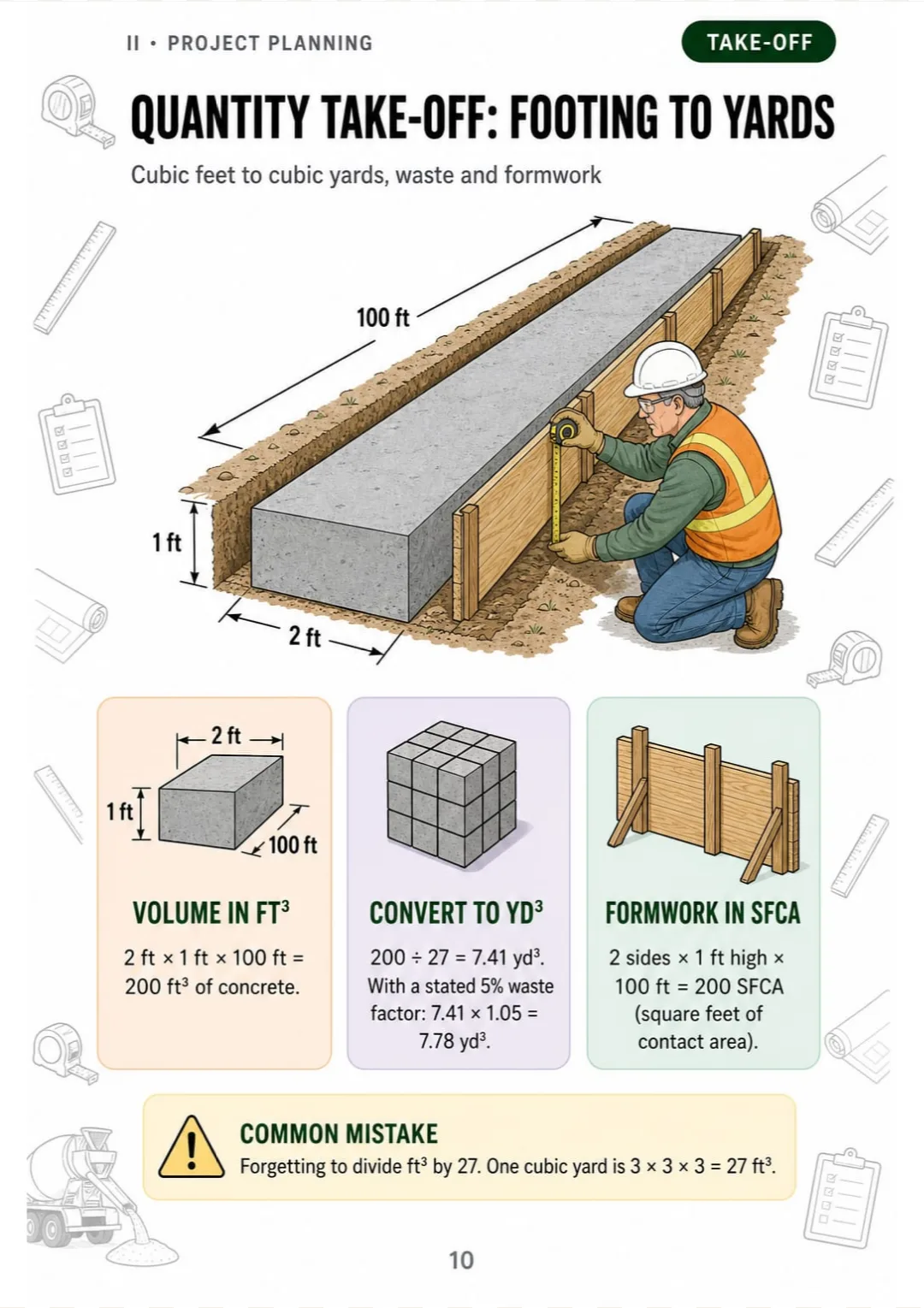
2 × 1 × 100 ft = 200 ft³ → 7.41 yd³ → 7.78 yd³ with 5% waste · 200 SFCA of formwork
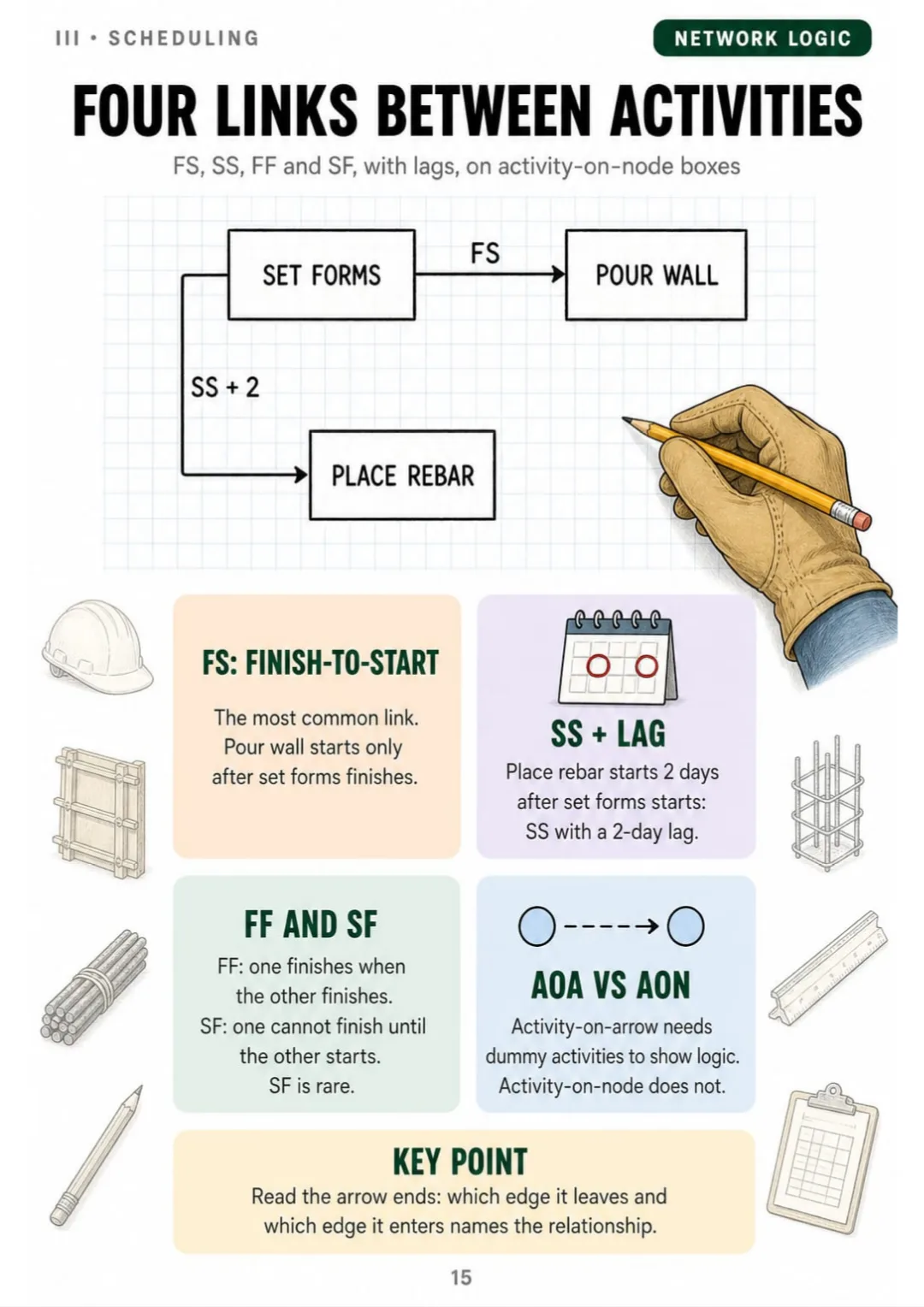
FS, SS, FF, SF with lags: pour wall after forms (FS), rebar 2 days after forms start (SS + 2).
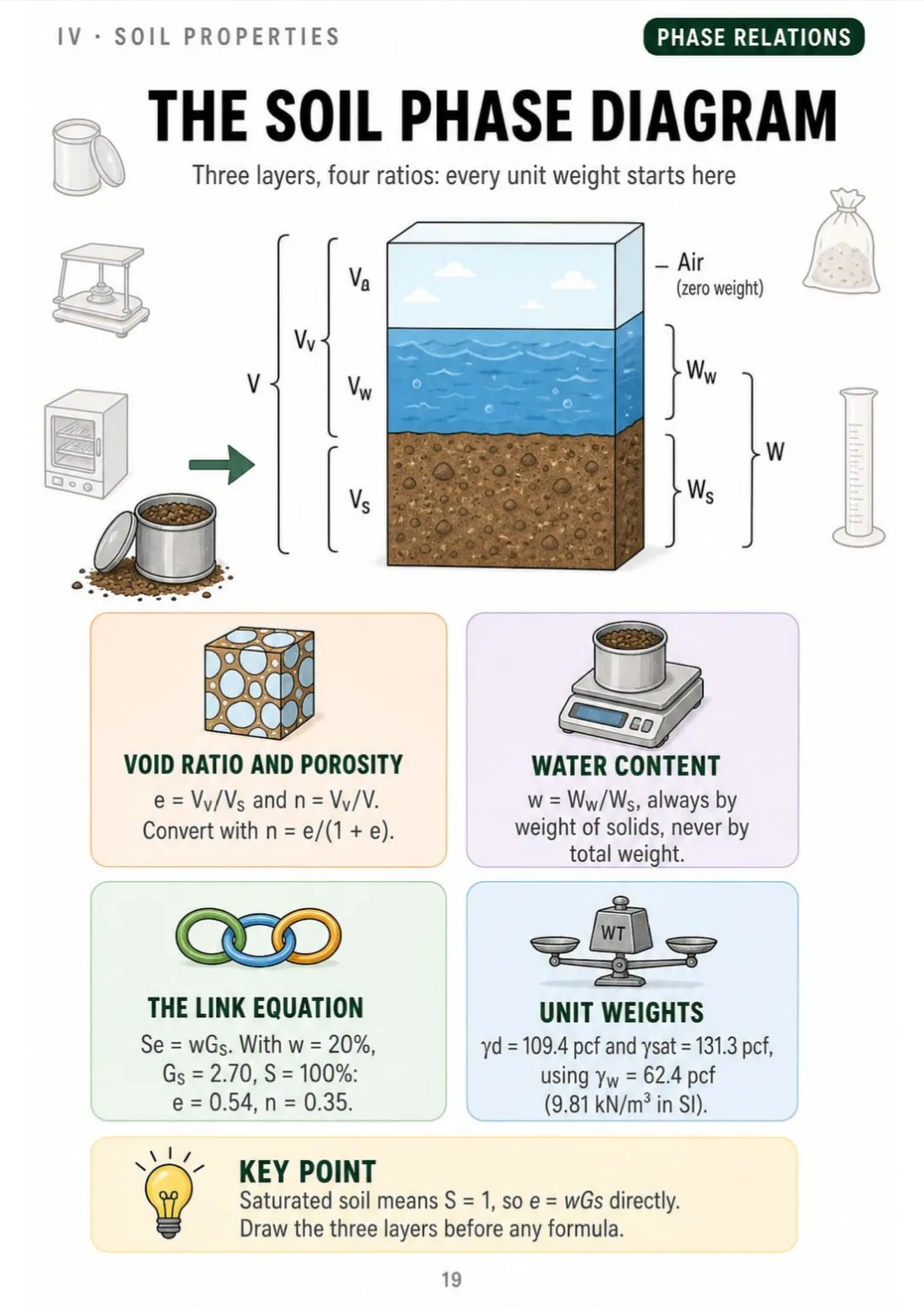
w = 20%, Gs = 2.70, S = 100% → e = 0.54, n = 0.35, γd = 109.4 pcf, γsat = 131.3 pcf
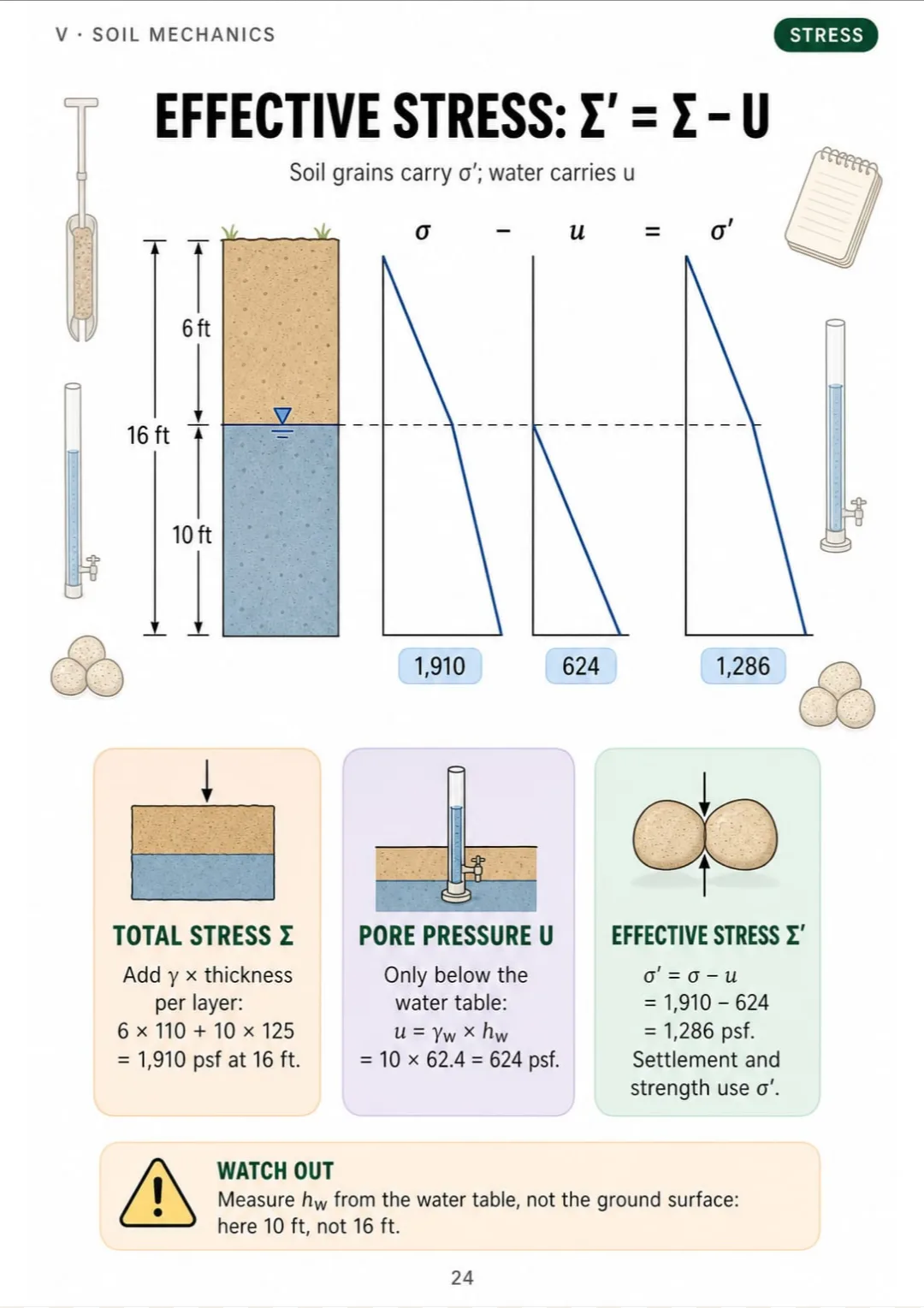
At 16 ft: σ = 1,910 psf, u = 624 psf, σ' = 1,286 psf.
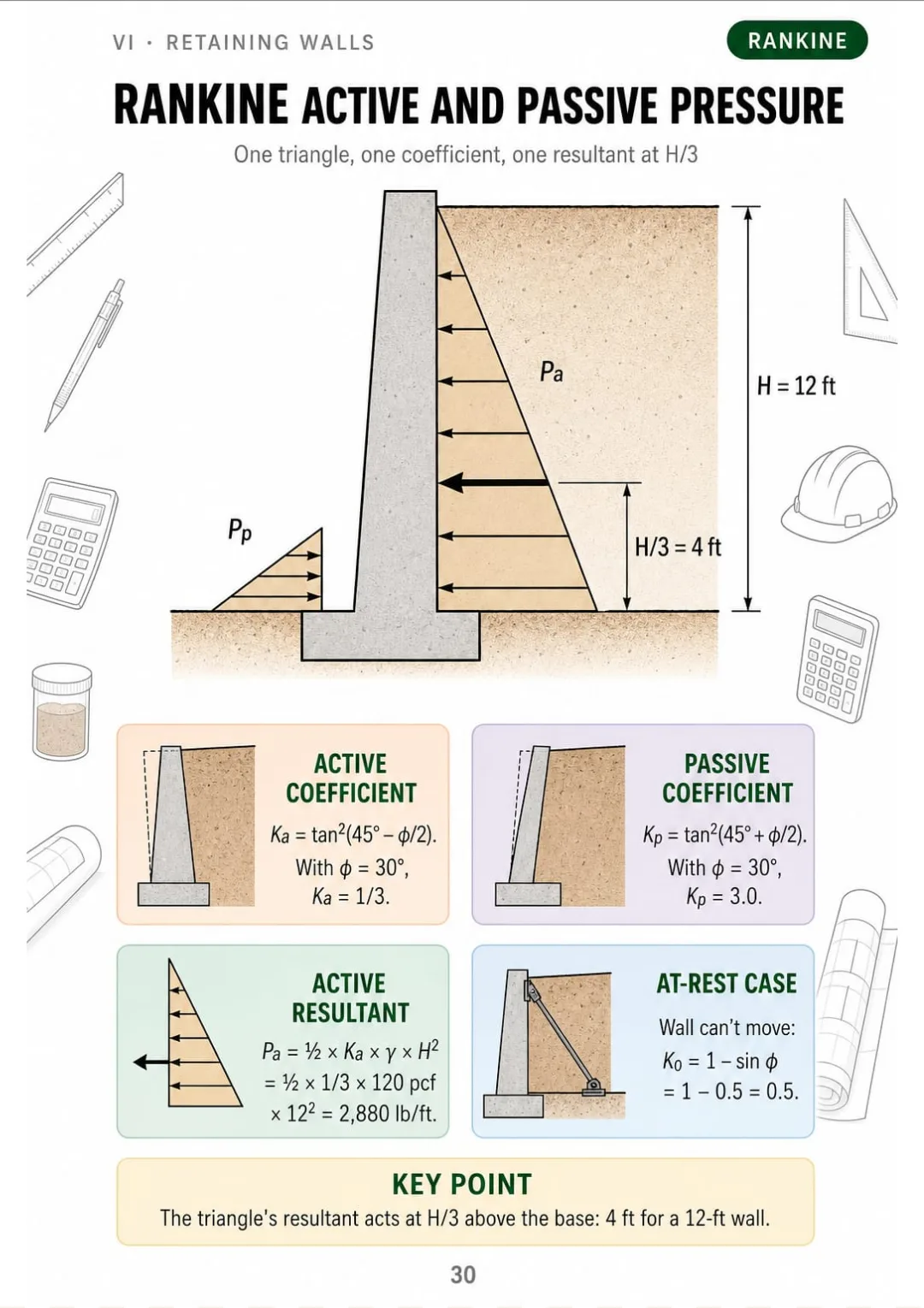
φ 30°, γ 120 pcf, H 12 ft: Ka = 1/3, Pa = 2,880 lb/ft at 4 ft
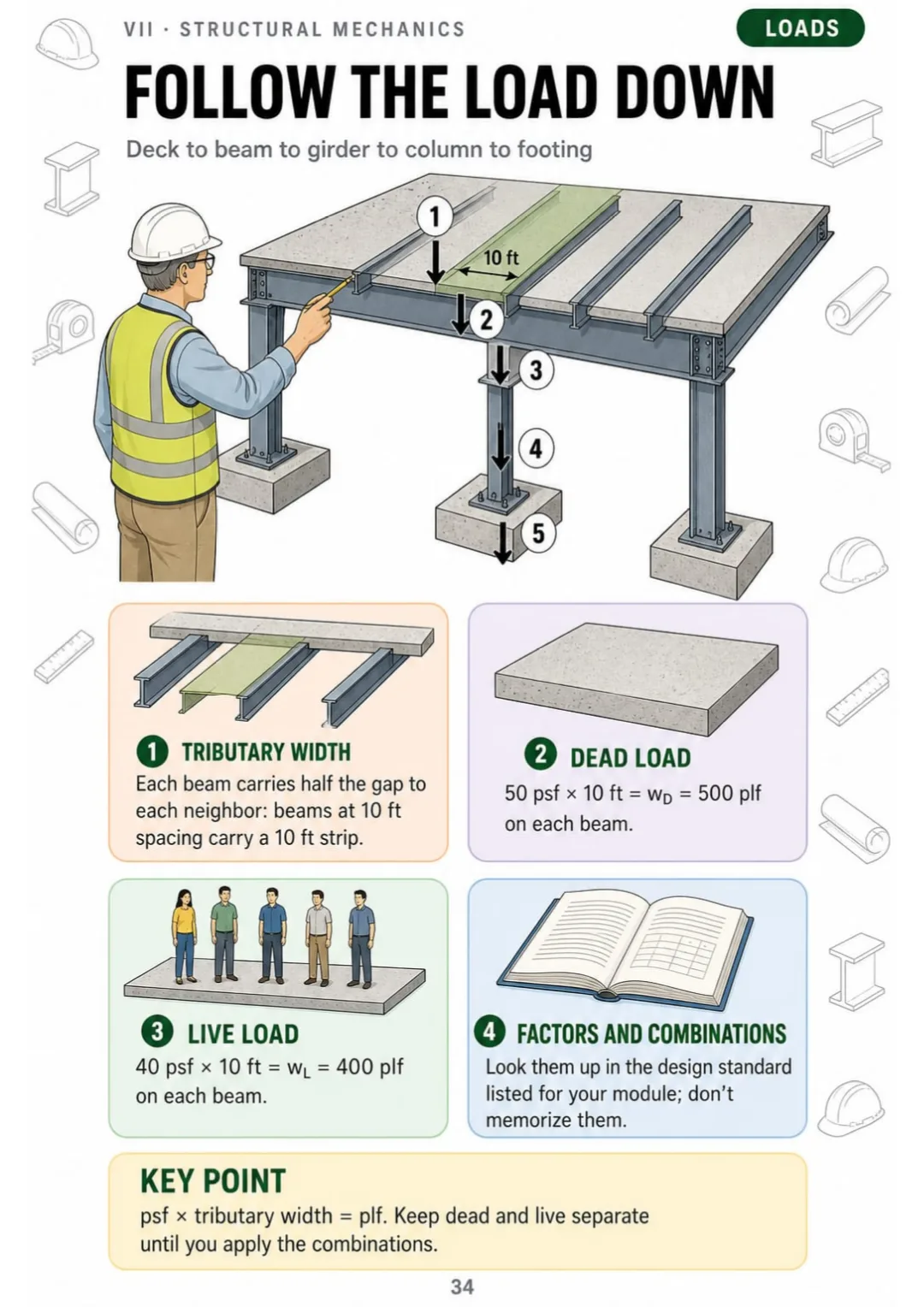
10 ft spacing × 50 psf dead and 40 psf live = 500 plf and 400 plf per beam
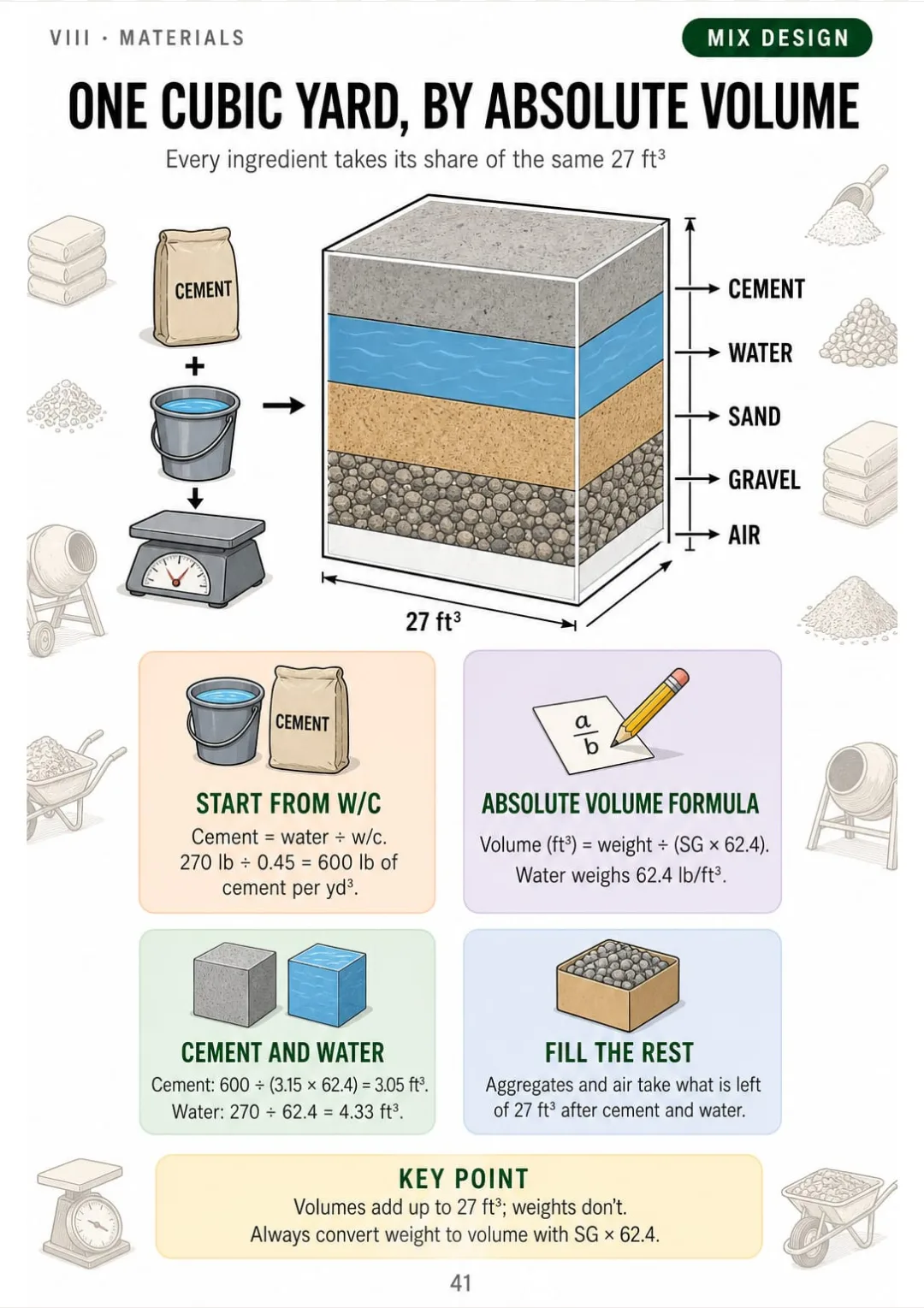
w/c 0.45 + 270 lb water = 600 lb cement = 3.05 ft³ of the 27 ft³ yard

Swipe to see more →

These are real pages from the book. The table of contents is the full one: 11 parts and 62 topics.

It's Not That You Can't Remember. It's That No One Ever Put It in Order.

You've read Bernoulli and the energy grade line three times this week. You close the prep book...

...and a week later the EGL, the HGL and the hydraulic jump blur together again. It was just forty formulas in a row.

FS, SS, FF, SF with lags: pour wall after forms (FS), rebar 2 days after forms start (SS + 2).

Here the EGL and the HGL are one drawn page: the HGL is elevation plus pressure head, and the EGL sits one velocity head, V²/2g, above it. Draw the pipe, the two lines and the losses, and the gap explains itself.

And on the pages next to it, every topic gets its own: the critical path, the soil phase diagram, effective stress, shear and moment diagrams, and the hydraulic jump.

First you understand why it works that way. Then the order sticks on its own.

SEE THE DIFFERENCE

Stop memorizing formulas you can't picture:

THIS
  • Pages and pages of dense text
  • Formulas without a single drawing
  • On exam day, you don't know where to start
The quantity of concrete required for a continuous spread footing is determined by multiplying the cross-sectional area of the footing by its total length, with all dimensions expressed in consistent units. The resulting volume, in cubic feet, is converted to cubic yards by dividing by 27, and an allowance for waste, typically expressed as a percentage, is subsequently applied. Formwork quantities are computed separately as the contact area of the forms with the concrete, expressed in square feet of contact area (SFCA), excluding the bottom surface.
FOR THIS
  • Every concept drawn
  • One topic per page, with the rules in boxes
  • You remember it because you've seen it
2 × 1 × 100 ft = 200 ft³ → 7.41 yd³ → 7.78 yd³ with 5% waste · 200 SFCA of formwork
CONTENTS

Take a Look at the 11 Parts and 62 Topics

The exam, project planning and economics, scheduling, soil properties, soil mechanics, earth pressure and retaining walls, structural mechanics, construction materials, hydraulics, hydrology and stormwater, and site development and safety: 66 pages, all drawn

IThe PE Civil Exam · pp. 5-9
  1. 80 Questions in a 9-Hour Appointment
  2. Five Modules and Their Shared Core
  3. Question Types and All-or-Nothing Scoring
  4. Searching the PE Civil Reference Handbook
  5. Exam Day Rules and Approved Calculators
IIProject Planning and Engineering Economics · pp. 10-14
  1. Quantity Take-Off Methods
  2. Cost Estimating Basics
  3. Time Value of Money
  4. Present Worth and Life-Cycle Cost
  5. Earned Value and Productivity
IIIProject Scheduling · pp. 15-18
  1. Activity Sequencing and Network Logic
  2. Critical Path Method
  3. Time-Cost Trade-Off
  4. Resource Scheduling and Leveling
IVSoil Properties and Classification · pp. 19-23
  1. The Soil Phase Diagram
  2. Index Properties and Atterberg Limits
  3. USCS and AASHTO Soil Classification
  4. Reading a Boring Log
  5. Permeability and Darcy's Law
VSoil Mechanics · pp. 24-29
  1. Total Stress, Pore Pressure, Effective Stress
  2. Consolidation and Settlement
  3. Shear Strength and Mohr-Coulomb
  4. Bearing Capacity of Shallow Footings
  5. Slope Stability Factor of Safety
  6. Compaction and the Proctor Curve
VILateral Earth Pressure and Retaining Walls · pp. 30-33
  1. Rankine Active and Passive Pressure
  2. Surcharge and Water Pressure on Walls
  3. Retaining Wall Stability Checks
  4. Support of Excavation Systems
VIIStructural Mechanics · pp. 34-40
  1. Loads, Load Paths and Combinations
  2. Shear and Moment Diagrams
  3. Bending and Shear Stress
  4. Combined Stresses and Mohr's Circle
  5. Beam Deflection
  6. Axial Members and Column Buckling
  7. Trusses and the Method of Joints
VIIIConstruction Materials · pp. 41-45
  1. Concrete Mix Design Basics
  2. Concrete Strength and Field Testing
  3. Reinforcing and Structural Steel
  4. Wood and Masonry Basics
  5. Material Testing and Spec Conformance
IXHydraulics · pp. 46-52
  1. Continuity and the Bernoulli Equation
  2. Energy and Hydraulic Grade Lines
  3. Pipe Friction and Minor Losses
  4. Manning's Equation for Open Channels
  5. Specific Energy and Critical Depth
  6. Hydraulic Jump and Energy Dissipation
  7. Culvert Inlet and Outlet Control
XHydrology and Stormwater · pp. 53-58
  1. Rainfall IDF Curves and Return Period
  2. Time of Concentration
  3. The Rational Method
  4. SCS/NRCS Curve Number Runoff
  5. The Unit Hydrograph
  6. Detention Pond Sizing
XISite Development and Safety · pp. 59-66
  1. Layout, Benchmarks and Staking
  2. Horizontal Curve Elements
  3. Vertical Curve Elements
  4. Earthwork Cut and Fill Volumes
  5. The Mass Diagram and Haul
  6. Groundwater and Dewatering
  7. Erosion and Sediment Control
  8. Work Zone and Construction Safety

What If Every Topic Fit on a Single Page?

Picture this:

Instead of rereading half a page on effective stress without being able to see it...

...you open the page and find the soil column with the water table, the layers and the stress at each depth, with σ, u and σ' worked out in the same order.

At 16 ft: σ = 1,910 psf, u = 624 psf, σ' = 1,286 psf.

And the critical path, Rankine pressure, shear and moment diagrams, Manning's equation and vertical curves become drawings and tables you can read at a glance.

You stop repeating and start understanding.

That's exactly what The PE Civil Sketchbook does. It's not “just another prep book.” It's 11 parts and 62 drawn topics, each with a worked example solved step by step with units. Because what your brain sees in order, it remembers.

Because what your brain sees organized, it remembers.

Here Is What You Get with The PE Civil Sketchbook:

Ipp. 5-9

The PE Civil Exam

How the 9-hour appointment works, the five modules and what they share, question types and scoring, searching the handbook PDF, and exam day rules.

IIpp. 10-14

Project Planning and Engineering Economics

Quantity take-offs, cost estimates, time value of money, present worth and life-cycle cost, earned value and productivity.

IIIpp. 15-18

Project Scheduling

Activity links and network logic, the critical path, time-cost trade-offs, and resource scheduling and leveling.

IVpp. 19-23

Soil Properties and Classification

The phase diagram, index properties and Atterberg limits, USCS and AASHTO classification, boring logs and Darcy's law.

Vpp. 24-29

Soil Mechanics

Effective stress, consolidation and settlement, Mohr-Coulomb, bearing capacity of footings, slope stability and the Proctor curve.

VIpp. 30-33

Lateral Earth Pressure and Retaining Walls

Rankine active and passive pressure, surcharge and water on walls, wall stability checks and support of excavation.

VIIpp. 34-40

Structural Mechanics

Load paths and combinations, shear and moment diagrams, bending and shear stress, Mohr's circle, deflection, buckling and trusses.

VIIIpp. 41-45

Construction Materials

Concrete mix design and field testing, reinforcing and structural steel, wood and masonry, and spec conformance.

IXpp. 46-52

Hydraulics

Bernoulli, the EGL and HGL, pipe friction and minor losses, Manning's equation, critical depth, the hydraulic jump and culverts.

Xpp. 53-58

Hydrology and Stormwater

IDF curves, time of concentration, the rational method, NRCS curve number, the unit hydrograph and detention ponds.

XIpp. 59-66

Site Development and Safety

Layout and staking, horizontal and vertical curves, cut and fill, the mass diagram, dewatering, erosion control and work zone safety.

At the end of the book: A worked example on every page, solved step by step with U.S. Customary and SI units.


And That Is Not All: 2 More Books, Free

PE Civil Worked Problems Workbook

BONUS 1: «PE Civil Worked Problems Workbook»

Value on its own: US$ 17.90

Practice with 40 original exam-style problems across the shared core, each worked step by step with units, so you see exactly where the setup turns into the answer.

250 PE Civil Terms on Cards

BONUS 2: «250 PE Civil Terms on Cards»

Value on its own: US$ 14.90

Review the terms you mix up in minutes: the term on the front, and a one-line definition with a tiny sketch on the back, ready to print and carry.

The PE Civil Sketchbook + 2 Free Books

  • The PE Civil Sketchbook: 66 illustrated pagesUS$ 87
  • BONUS 1: PE Civil Worked Problems WorkbookUS$ 17.90
  • BONUS 2: 250 PE Civil Terms on CardsUS$ 14.90
  • High-resolution PDF to printIncluded
Total value US$ 119.80
YOUR PRICE:
US$ 37
You save US$ 82.80
YES, I WANT THE PE CIVIL SKETCHBOOK FOR US$ 37

📄 This is a digital PDF book sent to your email: nothing is printed or shipped.

Secure purchaseEncrypted payment30-day guarantee

PDF by email: The PE Civil Sketchbook reaches your inbox as a PDF, and the two free books come by email too. One-time payment, no installments or hidden costs.

Is This Book for You?

You're starting your PE Civil prep

You're starting your PE Civil prep

The shared core of all five modules, one concept per page, to work through on weeknights and weekends.

Your exam date is coming up

Your exam date is coming up

Every worked example solved in the same order, with units, a page on searching the handbook PDF, and 40 exam-style problems in the workbook to practice the setups.

You've been working for years

You've been working for years

A visual refresher of what you haven't touched since school, outside your specialty: hydraulics, soils, vertical curves.

To Sum Up: Here Is What You Get

US$ 119.80US$ 37
YES, I WANT THE PE CIVIL SKETCHBOOK FOR US$ 37

📄 This is a digital PDF book sent to your email: nothing is printed or shipped.

30DAYS
GUARANTEE

30-Day Guarantee

30-day guarantee: tell us what didn't work and we'll refund 100%.

You have 30 days to try The PE Civil Sketchbook and the two bonus books. If it doesn't work for you, tell us what didn't work and we'll refund 100% of what you paid. One-time payment, no subscription.

Frequently Asked Questions

How do I get the material?

The PE Civil Sketchbook comes as a high-resolution PDF by email, to read on your phone, tablet or computer, or to print. The two bonus books, PE Civil Worked Problems Workbook and 250 PE Civil Terms on Cards, come by email too.

Is it a monthly payment or one-time?

One-time payment. No installments and no subscription.

Who is it for?

For civil engineers and EITs preparing for the NCEES PE Civil exam in any of the five modules: Construction, Geotechnical, Structural, Transportation, or Water Resources and Environmental. It covers the concepts the modules share. It's not a full course for any single module and doesn't go deep into each module's design standards. Check the table of contents above.

What sources is it based on?

It's organized from the NCEES PE Civil exam specifications effective April 2024. No design standard value is written from memory: each page points you to the standard listed for your module. Before you start, check the current specifications and the official exam guide on the NCEES website.

Is this official NCEES material?

No. It's an independent study guide, not affiliated with or endorsed by NCEES. It doesn't reproduce figures, tables or pages from the PE Civil Reference Handbook, and it doesn't give you a certificate or PDH credit.

Does it replace my review course?

No. It doesn't replace a review course, the NCEES Reference Handbook or your module's design standards. It's for reviewing with drawings what your course explains in text.

Are the practice problems the ones on the exam?

No. Every problem is original and exam-style, written for this book and its workbook. They're not official NCEES questions.

Can I print it?

Yes, at home or at a print shop. On exam day you can only use the electronic references NCEES provides, so this is for studying beforehand.

What if I don't like it?

You have 30 days. Tell us what didn't work and we'll refund 100%.

One Last Thing Before You Decide...

You don't have to reread the same page hoping it sticks this time.

You don't have to memorize formulas you can't picture.

And you definitely don't have to walk into the exam not knowing where to start.

There's a simpler way. And it's one click away. Now it's your turn.

One-time payment: US$ 37 · Guarantee: 30 days · PDF by email

YES, I WANT THE PE CIVIL SKETCHBOOK FOR US$ 37

📄 This is a digital PDF book sent to your email: nothing is printed or shipped.